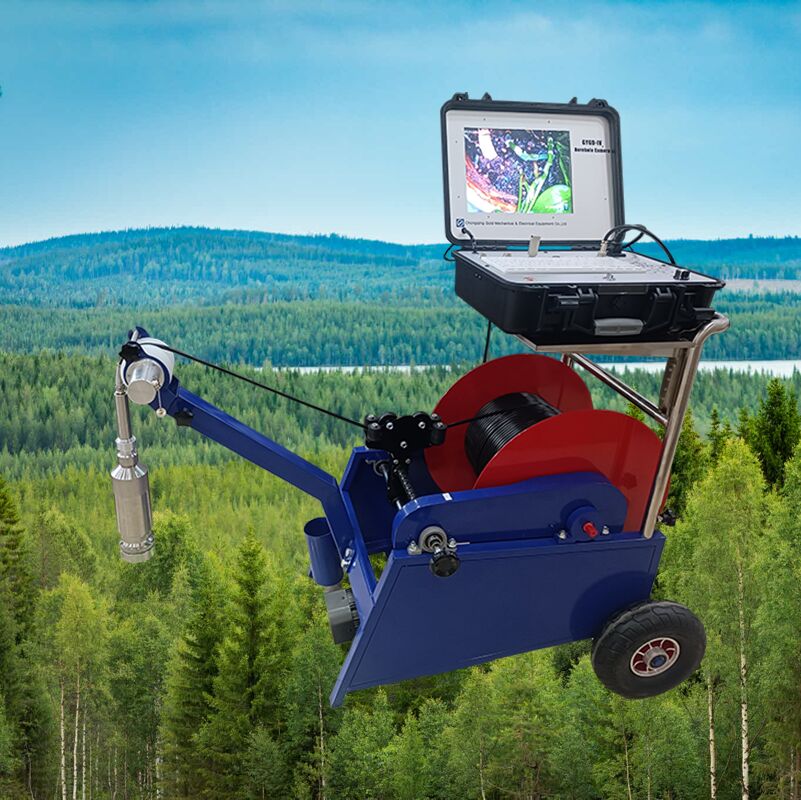
GYGD-IV cámara rotativa de inspección de perforaciones: extraer décadas de aprendizaje de su archivo de inspección
Muchas organizaciones tienen años de videos de inspección de pozos almacenados en discos duros, pero el conocimiento contenido en esos videos permaneceatrapados como imágenes inexplorables, inanalizablesEl.GYGD-IV Cámara de inspección de orificios giratoriaincluye unmódulo de extracción de datos históricosque se aplicavisión por ordenador y reconocimiento de patronesa todo su archivo de inspección, extraertendencias, correlaciones y señales predictivasque antes eran invisibles.administradores de activos, ingenieros de fiabilidad y analistas de datos, esto transforma un archivo pasivo en un archivoRepositorio activo de inteligencia.
Extracción automática de características en miles de vídeos
El software de escritorio GYGD-IV puede procesar por lotes años de videos de inspección (en formato MP4) de cualquier fuente, no solo los grabados por las cámaras GYGD-IV.red neuronal convolucionalentrenados para reconocer:
-
Las grietas (circumferenciales, longitudinales, ramificadas)
-
Corrosión (pitos, uniformes, grietas)
-
Escala (carbonato de calcio, hierro, sílice, sulfato de bario)
-
Biofilm (bacterias del hierro, formadoras de lodo, reductoras de sulfatos)
-
Daños mecánicos (abolladuras, abolladuras, deformaciones)
-
Acumulación de sedimentos (arena, limo, grava)
Para cada característica detectada, los registros del softwareprofundidad, tamaño, morfología y puntaje de confianza. La salida es unbase de datos estructuradaConectando cada pozo, cada fecha de inspección y cada característica.
Modelado de degradación en serie temporal
Una vez que las características se extraen en múltiples inspecciones del mismo pozo, el software puedelas curvas de degradación de ajustePara una grieta que aparezca en tres inspecciones durante cinco años, el software calcula eltasa de crecimiento de grietasEn el caso de las fosas de corrosión, se estima eltasa de progresión de la profundidad del pozoEstos modelos pueden predecir cuándo una característica alcanzará unel umbral crítico(por ejemplo, longitud de la grieta igual al grosor de la pared).Recomendación de intervalos de inspección basados en el riesgo: Inspectar de nuevo este pozo en dieciocho meses, no veinticuatro, basado en la tasa de corrosión observada.
Correlación de patrón en los pozos
El software puede analizar cientos de pozos simultáneamente, buscandocorrelacionesentre la aparición de características y los atributos del pozo, tales como:
-
Formación geológica(¿una determinada formación muestra consistentemente una escalación?)
-
Química del agua(importado a partir de resultados de laboratorio)
-
Tipo y ubicación de la bomba(¿una bomba colocada a una cierta profundidad causa más erosión relacionada con la turbulencia?)
-
Fecha y método de construcción(¿los pozos construidos en un año determinado eran más propensos a agrietarse?)
Estas correlaciones generanlas hipótesisque puede ser probado con inspecciones específicas, lo que conduce amejoras de diseño y cambios operativos.
Clustering de la causa raíz
Para los pozos que han fallado, el software puede analizar los datos de inspección de la última inspección antes de la falla para identificarpatrones de precursores¿Los pozos fallidos mostraron un aumento repentino en la densidad de grietas seis meses antes del colapso? ¿Mostraron un tipo específico de escala no visto en pozos sobrevivientes?agrupación sin supervisiónEn la actualidad, la mayoría de losbiblioteca de firmas de falloLas inspecciones futuras se pueden comparar automáticamente con esta biblioteca, y los pozos que muestran una firma de falla pueden ser señalados para una intervención inmediata.

Cuadro: Especificaciones de minería de datos


 ¡Su mensaje debe tener entre 20 y 3.000 caracteres!