logo
Chongqing Gold Mechanical & Electrical Equipment Co.,Ltd
> 제품 > 땅속으로 낸 구멍 정밀검사 카메라 >
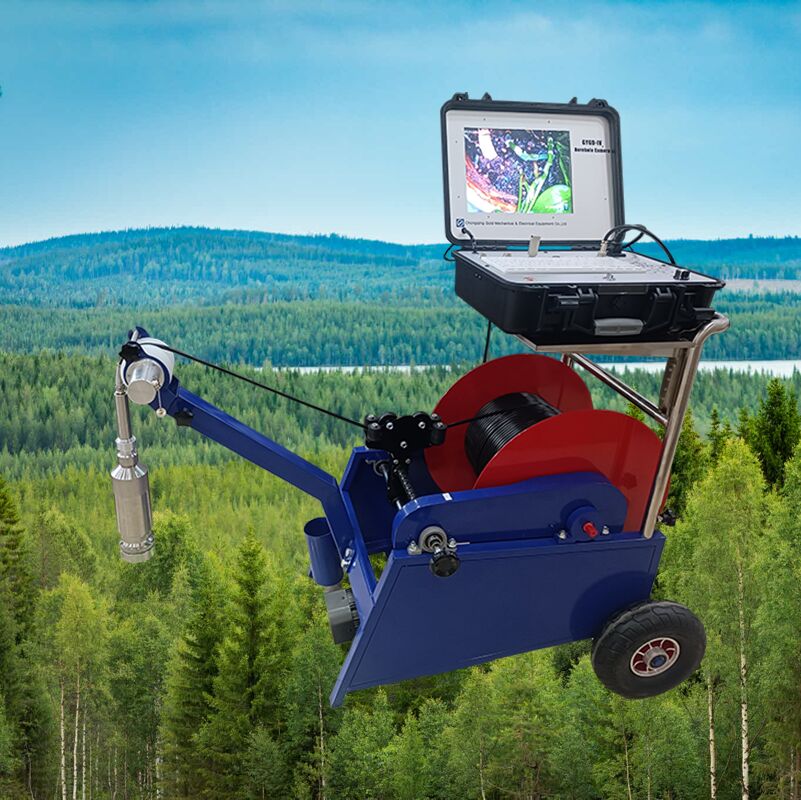
Abandoned Well Inspection Cam Perforation Cleanup Camera
  • Abandoned Well Inspection Cam Perforation Cleanup Camera
  • Abandoned Well Inspection Cam Perforation Cleanup Camera
  • Abandoned Well Inspection Cam Perforation Cleanup Camera
  • Abandoned Well Inspection Cam Perforation Cleanup Camera
  • Abandoned Well Inspection Cam Perforation Cleanup Camera
  • Abandoned Well Inspection Cam Perforation Cleanup Camera
  • Abandoned Well Inspection Cam Perforation Cleanup Camera

Abandoned Well Inspection Cam Perforation Cleanup Camera

원래 장소 중국
브랜드 이름 GOLD
인증 ISO/CE
모델 번호 GYGD-IV
제품 상세정보
제품명:
시추공 카메라
가공 깊이:
최고 1000m
깊이 정확도:
0.01m
디스플레이 화면:
12인치 OLED 디스플레이 화면
저장:
32GB USB
보증 시간:
1년
강조하다: 

borehole inspection camera with waterproof design

,

abandoned well inspection camera for perforation cleanup

,

well perforation cleanup camera with LED lights

제품 설명

GYGD-IV Rotary Borehole Inspection Camera: Extracting Decades of Learning from Your Inspection Archive

Many organizations have years of borehole inspection videos stored on hard drives, but the knowledge contained in those videos remains trapped as unsearchable, unanalyzable footage. The GYGD-IV Rotary Borehole Inspection Camera includes a historical data mining module that applies computer vision and pattern recognition to your entire inspection archive, extracting trends, correlations, and predictive signals that were previously invisible. For asset managers, reliability engineers, and data analysts, this transforms a passive archive into an active intelligence repository.

Automated Feature Extraction Across Thousands of Videos
The GYGD-IV’s desktop software can batch-process years of inspection videos (in MP4 format) from any source, not just those recorded by GYGD-IV cameras. The software uses a convolutional neural network trained to recognize:

  • Cracks (circumferential, longitudinal, branching)

  • Corrosion (pitting, uniform, crevice)

  • Scale (calcium carbonate, iron, silica, barium sulfate)

  • Biofilm (iron bacteria, slime-forming, sulfate-reducing)

  • Mechanical damage (gouges, dents, deformation)

  • Sediment accumulation (sand, silt, gravel)

For each detected feature, the software records depth, size, morphology, and confidence score. The output is a structured database linking each well, each inspection date, and each feature.

Time-Series Degradation Modeling
Once features are extracted across multiple inspections of the same well, the software can fit degradation curves to each feature type. For a crack that appears in three inspections over five years, the software calculates the crack growth rate (millimeters per year). For corrosion pitting, it estimates the pit depth progression rate. These models can forecast when a feature will reach a critical threshold (e.g., crack length equal to wall thickness). The result is a risk-based inspection interval recommendation: “Inspect this well again in eighteen months, not twenty-four, based on observed corrosion rate.”

Pattern Correlation Across Wells
The software can analyze hundreds of wells simultaneously, searching for correlations between feature occurrence and well attributes such as:

  • Geological formation (does a certain formation consistently show scaling?)

  • Water chemistry (imported from laboratory results)

  • Pump type and placement (does a pump set at a certain depth cause more turbulence-related erosion?)

  • Construction date and method (were wells built in a certain year more prone to cracking?)

These correlations generate hypotheses that can be tested with targeted inspections, leading to design improvements and operational changes.

Root Cause Clustering
For wells that have failed, the software can analyze the inspection data from the last inspection before failure to identify precursor patterns. Did failing wells show a sudden increase in crack density six months before collapse? Did they exhibit a specific type of scaling not seen in surviving wells? The software applies unsupervised clustering to group failure precursors, creating a failure signature library. Future inspections can be automatically compared to this library, and wells showing a failure signature can be flagged for immediate intervention.

Abandoned Well Inspection Cam Perforation Cleanup Camera 0

Abandoned Well Inspection Cam Perforation Cleanup Camera 1


Abandoned Well Inspection Cam Perforation Cleanup Camera 2

Table: Data Mining Specifications


Analytics Feature GYGD-IV Capability
Batch Processing Years of MP4 videos processed overnight
CNN Feature Detection Cracks, corrosion, scale, biofilm, damage, sediment
Degradation Curves Crack growth, pit progression, scale accumulation rates
Forecasting Time to critical threshold, recommended next inspection
Correlation Analysis Cross-well pattern matching with geological, chemical data
Failure Signature Library Precursor patterns from historical failures
Output Database SQLite or CSV for integration with BI tools


Abandoned Well Inspection Cam Perforation Cleanup Camera 3

Abandoned Well Inspection Cam Perforation Cleanup Camera 4

Abandoned Well Inspection Cam Perforation Cleanup Camera 5

추천 상품

언제든지 우리와 연락하세요

0086-159-2263-6015
1F 기술 건물, 롱신 산업단지, 난안 구, 충칭 중국
직접적으로 당신의 조사를 우리에게 보내세요