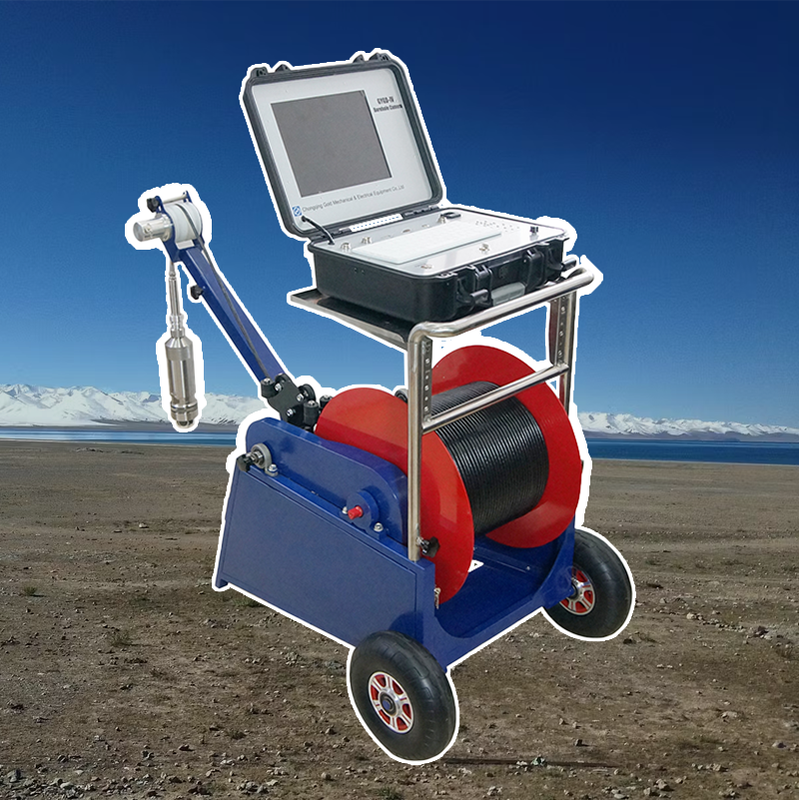
GYGD-IV Caméra rotative d'inspection de forage: explorer l'histoire souterraine sans la déranger
Les archéologues et les gestionnaires du patrimoine culturel ont souvent besoin de voir à l'intérieur des puits anciens, des citernes, des chambres funéraires et des systèmes de tunnels sans creuser ou endommager des structures fragiles.GYGD-IV, caméra rotative d'inspection des trous de forageest unoutil d'enquête non invasifqui fournitaccès visuel haute fidélitéIl s'agit d'un ouvrage de référence pour la recherche sur le patrimoine culturel sous-sol, capturant les détails des techniques de construction, des marques d'outils, des inscriptions et des emplacements des objets sans aucune intrusion physique.les archéologues, les responsables de la préservation historique et les gestionnaires des ressources culturelles, cette caméra ouvre une fenêtre sur le passé qui reste complètement intacte.
Déploiement ultra-doux avec une perturbation minimale de la surface
Les GYGD-IVune sonde de petit diamètreLes ouvertures existantes peuvent être pénétrées par des puits anciens, des conduits de ventilation ou même des fissures de maçonnerie sans qu'il soit nécessaire de creuser ou de modifier le tissu historique.cône de nez mouetrouleaux de centralisationLes matériaux utilisés pour la fabrication de ces produits sont constitués de polyuréthane non abrasif, ce qui empêche les rayures ou les éclaboussures de pierres ou de plâtre anciens.câbleest enveloppé dans unTresses en textile soupleL'ensemble du système peut être actionné par unpersonne seulede la surface, ne laissant aucune trace de l'enquête.
Documentation haute résolution pour publication et conservation
Les GYGD-IVimages fixes de douze mégapixelsLes détecteurs de l'eau peuvent capturer des détails tels que des traces de ciseaux, la composition du mortier, des taches au niveau de l'eau et même de faibles inscriptions.capteur calibré par couleurLa couleur de la peau peut être différente selon le type de peau.Rotation à 360 degrésIl permet une documentation complète des espaces cylindriques tels que les puits et les citernes, ce qui produit unimage panoramique continueCes images sont adaptées à lapublications évaluées par des pairs, expositions de musées et planification de la conservation.
Affichage à distance pour consultation d'experts sans accès au site
Beaucoup de sites archéologiques se trouvent dans des zones reculées ou politiquement sensibles, ou sont trop fragiles pour permettre à plusieurs chercheurs d'être sur place.capacité de diffusion en directL'expérience a permis à un archéologue principal de voir l'inspection de n'importe où dans le monde, guidant l'opérateur local vers les zones d'intérêt.fonctionnalité d'annotationpermet à l'expert à distance de marquer les caractéristiques pour une étude ultérieure.consultation à distanceréduit les déplacements, préserve les sites fragiles et accélère l'analyse.
Enregistrement contextuel avec données spatiales
Les GYGD-IVcodeur de profondeurfournit un positionnement vertical précis, essentiel pour créerjournaux stratigraphiques. Leinclinomètre facultatifIl mesure l'inclinaison de la sonde, ce qui permet une correction pour les puits hors vertical.Récepteur GPSToutes les données peuvent être exportées versSIG (systèmes d'information géographique)etLogiciel de modélisation 3D(comme Agisoft Metashape ou RealityCapture) pour créerjumeaux numériquesdes éléments du patrimoine souterrain.
Étude de cas: documentation des puits de l'époque romaine
Une équipe d'archéologues a utilisé le GYGD-IV pour documenter un puits romain de douze mètres de profondeur dans une zone protégée où les fouilles étaient interdites.un puits de bois remarquablement préservé,marques d'outils correspondant à des pioches romaines, et en bas, unerécipient en céramique casséLes images haute résolution ont permis à l'équipe de publier un article sur les techniques de construction de puits romains sans jamais enlever un seul artefact.

Tableau: Spécifications archéologiques


 Votre message doit contenir entre 20 et 3 000 caractères!