logo
Chongqing Gold Mechanical & Electrical Equipment Co.,Ltd
電子メール: master@hy-industry.com 電話番号: 0086-159-2263-6015
> プロダクト > 地球物理学の調査の器械 >
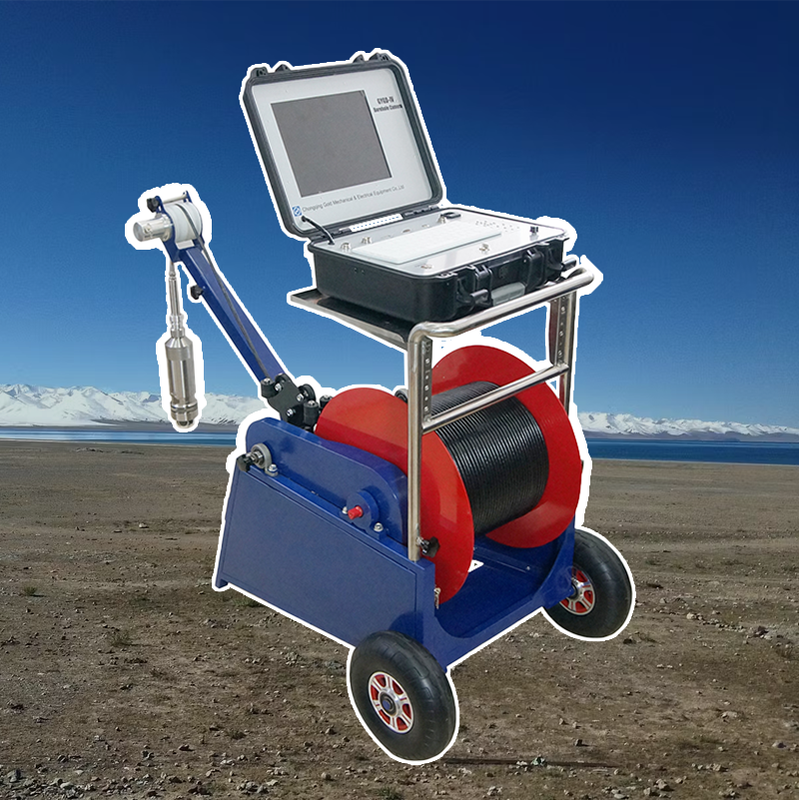
Grout Seal Integrity Viewer Packer Setting Confirmation Cam
  • Grout Seal Integrity Viewer Packer Setting Confirmation Cam
  • Grout Seal Integrity Viewer Packer Setting Confirmation Cam
  • Grout Seal Integrity Viewer Packer Setting Confirmation Cam
  • Grout Seal Integrity Viewer Packer Setting Confirmation Cam
  • Grout Seal Integrity Viewer Packer Setting Confirmation Cam
  • Grout Seal Integrity Viewer Packer Setting Confirmation Cam
  • Grout Seal Integrity Viewer Packer Setting Confirmation Cam

Grout Seal Integrity Viewer Packer Setting Confirmation Cam

起源の場所 重慶、中国
ブランド名 Gold
証明 ISO9001 CCC CE
モデル番号 GYGD IV
プロダクト細部
製品名:
ボーリング孔検査カメラ
画面表示:
1024*768 ピクセル
深度範囲:
0~2000メートル
センサー:
ソニー1/3インチ CCD 0.1ルックス
ケーブル引張強度:
250kg
プレッシャー:
最大 150Mpa
ライト:
11pcs LEDライト,照明調整可能
ストレージ:
SDカード/Uディスク
カスタムサービス:
ロゴ,デザインなどで受け入れられます
ウインチタイプ:
電気・自動車用ケーブル配列
ハイライト: 

grout seal integrity viewer

,

packer setting confirmation cam

,

geophysical exploration instrument cam

製品の説明

GYGD-IV Rotary Borehole Inspection Camera: Exploring Underground History Without Disturbing It

Archaeologists and cultural heritage managers often need to see inside ancient wells, cisterns, burial chambers, and tunnel systems without excavating or damaging fragile structures. The GYGD-IV Rotary Borehole Inspection Camera is a non-invasive investigation tool that provides high-fidelity visual access to subsurface cultural heritage, capturing details of construction techniques, tool marks, inscriptions, and artifact locations without any physical intrusion. For archaeologists, historic preservation officers, and cultural resource managers, this camera opens a window into the past that remains completely undisturbed.

Ultra-Gentle Deployment with Minimal Surface Disturbance
The GYGD-IV’s small-diameter probe (seventy-five millimeters) can enter existing openings—old well casings, ventilation shafts, or even cracks in masonry—without requiring any excavation or modification of the historic fabric. The soft nose cone and centralizer rollers made of non-abrasive polyurethane prevent scratching or chipping of ancient stone or plaster. The cable is sheathed in a soft textile braid (optional) to avoid marring surfaces. The entire system can be operated by a single person from the surface, leaving no trace of the investigation.

High-Resolution Documentation for Publication and Preservation
The GYGD-IV’s twelve-megapixel still images capture details such as chisel marks, mortar composition, water-level stains, and even faint inscriptions. The color-calibrated sensor ensures accurate reproduction of pigments and patinas. The 360-degree rotation allows complete documentation of cylindrical spaces like wells and cisterns, producing a continuous panoramic image that can be “unrolled” into a flat map. These images are suitable for peer-reviewed publication, museum exhibits, and conservation planning.

Remote Viewing for Expert Consultation Without Site Access
Many archaeological sites are in remote or politically sensitive areas, or are too fragile to allow multiple researchers onsite. The GYGD-IV’s live streaming capability allows a lead archaeologist to view the inspection from anywhere in the world, guiding the local operator to areas of interest. The annotation feature lets the remote expert mark features for later study. This remote consultation reduces the need for travel, preserves fragile sites, and accelerates analysis.

Contextual Recording with Spatial Data
The GYGD-IV’s depth encoder provides precise vertical positioning, essential for creating stratigraphic logs. The optional inclinometer measures the probe’s tilt, allowing correction for off-vertical wells. The GPS receiver records the wellhead coordinates. All data can be exported to GIS (geographic information systems) and 3D modeling software (such as Agisoft Metashape or RealityCapture) to create digital twins of subsurface heritage features.

Case Study: Roman-Era Well Documentation
A team of archaeologists used the GYGD-IV to document a twelve-meter-deep Roman well in a protected area where excavation was prohibited. The camera revealed remarkably preserved wood-lined shaft, tool marks consistent with Roman pickaxes, and at the bottom, a broken ceramic vessel (likely a dropped water jar). The high-resolution imagery allowed the team to publish a paper on Roman well construction techniques without ever removing a single artifact.

Grout Seal Integrity Viewer Packer Setting Confirmation Cam 0

Grout Seal Integrity Viewer Packer Setting Confirmation Cam 1

Grout Seal Integrity Viewer Packer Setting Confirmation Cam 2

Table: Archaeological Specifications


Heritage Feature GYGD-IV Capability
Probe Diameter Seventy-five millimeters, fits most historic openings
Gentle Contact Soft nose cone, polyurethane rollers, textile cable braid (optional)
Image Detail Twelve megapixels, color-calibrated, captures inscriptions and tool marks
Panoramic Capture 360-degree rotation for cylindrical structures
Remote Expert Viewing Live stream with annotation for offsite consultation
Spatial Data Depth encoder, inclinometer, GPS for 3D modeling
Non-Invasive No excavation, no contact with artifacts, no damage to surfaces


Grout Seal Integrity Viewer Packer Setting Confirmation Cam 3

Grout Seal Integrity Viewer Packer Setting Confirmation Cam 4

Grout Seal Integrity Viewer Packer Setting Confirmation Cam 5

私達にいつでも連絡しなさい

0086-159-2263-6015
1F 技術ビル,ロングシン工業公園,南安地区,重慶 中国
私達にあなたの照会を直接送りなさい