The Cognitive Planet - Building Earth's Central Nervous System
Weaving a Digital Fabric of Real-Time Global Geophysics
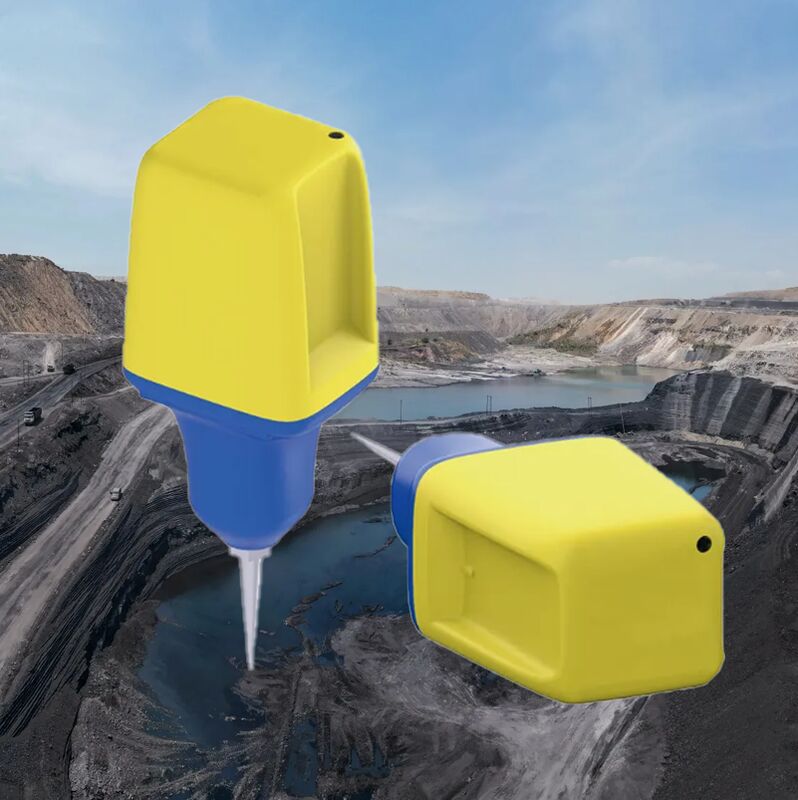
Imagine a world where every significant ground motion—from a minor tremor in California to a major subduction earthquake in Japan—is instantly detected, located, and characterized by a dense, globally distributed network of intelligent sensors. This is the vision of the Cognitive Planet, and the GD-3C Nodal Seismometer is its fundamental building block. By combining edge computing, mesh networking, and machine learning, these nodes form a self-organizing, self-healing digital nervous system for our planet, delivering real-time intelligence about Earth's dynamic behavior to anyone, anywhere.
Distributed Intelligence at the Edge
Traditional seismic monitoring centralizes data processing, creating latency and vulnerability. The GD-3C inverts this model, embedding significant computational capability directly at each node. Onboard algorithms continuously analyze the incoming waveform stream, detecting events, classifying sources (earthquake, landslide, explosion, vehicle), and estimating source parameters in real-time. Only the derived intelligence—event time, location, magnitude—is transmitted over low-bandwidth links, while raw waveforms are stored for later retrieval. This edge computing architecture enables global-scale monitoring with minimal infrastructure, as each node operates independently yet contributes to a collective awareness that far exceeds the sum of its parts.
Self-Organizing Mesh Networks for Ubiquitous Coverage
When deployed in arrays, GD-3C nodes automatically discover each other and form resilient mesh networks. If a node fails or communication links are severed, the network dynamically reroutes data through alternative paths, ensuring that no event goes unrecorded. This self-healing capability is critical for rapidly deployable emergency response networks following disasters, where existing infrastructure may be damaged. The nodes can also synchronize their internal clocks over the mesh, maintaining microsecond-level timing accuracy even when GPS is unavailable—essential for underground or underwater deployments. This creates a truly autonomous sensing fabric that can be draped over any terrain, from urban centers to remote wilderness, and immediately begin feeding intelligence into global situational awareness platforms.

Cognitive Planet Specifications Table


 Your message must be between 20-3,000 characters!