logo
Chongqing Gold Mechanical & Electrical Equipment Co.,Ltd
> 제품 > 지구 물리 탐사는 기계를 설치합니다 >
Contaminant Plume Imaging Tool Bridge Foundation Survey Meter
  • Contaminant Plume Imaging Tool Bridge Foundation Survey Meter
  • Contaminant Plume Imaging Tool Bridge Foundation Survey Meter
  • Contaminant Plume Imaging Tool Bridge Foundation Survey Meter
  • Contaminant Plume Imaging Tool Bridge Foundation Survey Meter
  • Contaminant Plume Imaging Tool Bridge Foundation Survey Meter
  • Contaminant Plume Imaging Tool Bridge Foundation Survey Meter

Contaminant Plume Imaging Tool Bridge Foundation Survey Meter

원래 장소 중국 충칭
브랜드 이름 GOLD
인증 CE, ISO
모델 번호 WGMD-9
제품 상세정보
제품명:
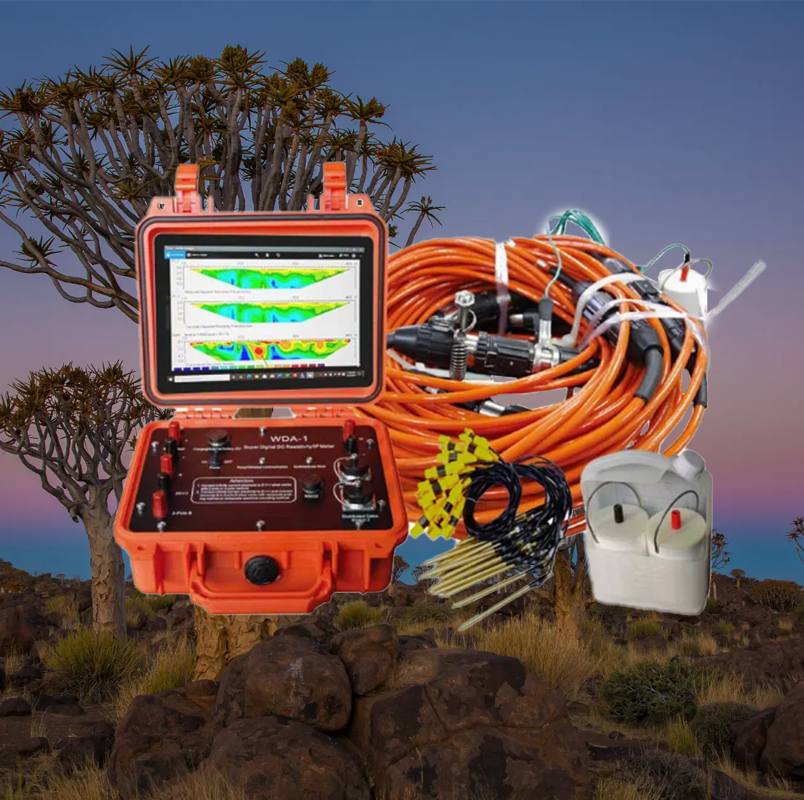
슈퍼 전기 다중 전극 조사 시스템
Brand name:
GOLD
원산지:
충칭, 중국
호스트 머신:
WDA-1
케이블:
5m 스페이스 케이블, 10m 스페이스 케이블 (선택 사항)
최대 출력:
7200W
최대 공급 전압:
± 1200V
작동 온도:
-10 ℃ ~+50 ℃, 95%RH
강조하다: 

contaminant plume imaging tool

,

bridge foundation survey meter

,

geophysical exploration instrument with warranty

제품 설명

Measurement Integrity from Electrode Contact to Final Section

Subsurface interpretation quality depends fundamentally on raw data integrity. This platform implements systematic data quality management at every stage of the acquisition and processing chain, transforming the subjective assessment of measurement validity into objective, quantifiable metrics. Rather than presenting geophysicists with ambiguous data requiring guesswork about reliability, the system provides confidence indicators that distinguish trustworthy measurements from those compromised by poor electrode contact, cultural noise, or instrument malfunction. This section documents the mechanisms that enable defensible interpretations suitable for regulatory submission, resource reporting, and engineering certification.

Data Quality Assurance Elements Table


Quality Dimension Measurement Approach Confidence Indicator User Decision Support
Electrode Contact Real-time resistance measurement per channel Color-coded status (green/yellow/red) Indicates need for re-seating or salting
Signal Stability Standard deviation of stacked measurements Numerical error percentage Flags measurements requiring restacking
Noise Environment Power spectrum analysis before acquisition SNR estimate (good/fair/poor) Recommends changes to stacking or filtering
Measurement Repeatability Comparison of forward and reverse current readings Percent difference display Identifies polarization or rectification issues
Geometric Accuracy Input vs. computed electrode positions RMS positioning error (cm) Validates array geometry for inversion
IP Decay Quality Curve fit error for chargeability calculation Chi-squared value Determines reliability of IP interpretation

Contaminant Plume Imaging Tool Bridge Foundation Survey Meter 0

Contaminant Plume Imaging Tool Bridge Foundation Survey Meter 1

Contaminant Plume Imaging Tool Bridge Foundation Survey Meter 2

The automated electrode contact testing routine operates before any measurements are taken, applying a low-voltage test signal to each electrode position and measuring ground resistance. Electrodes with resistance exceeding fifty thousand ohms are flagged for reinstallation; those between ten and fifty thousand receive cautionary indicators; those below ten thousand are confirmed as good. This pre-survey validation typically identifies twenty to thirty percent of electrodes requiring adjustment, preventing the collection of data that would later be rejected during processing. Field crews report that this feature alone saves an average of two hours per survey day by eliminating wasted acquisition time on poor contacts.

Dynamic stacking control adjusts measurement duration based on real-time noise assessment rather than fixed timer settings. The system continues stacking until the calculated standard deviation falls below a user-specified threshold or a maximum stacking time is reached. In quiet environments (remote desert, deep forest), this produces high-quality data with minimal stacking cycles. In noisy environments (near towns, power lines, mining operations), additional stacking automatically engages to achieve the required quality level. This adaptive approach ensures consistent data confidence across variable field conditions without requiring operator intervention or trial-and-error parameter adjustment.

Noise characterization tools provide operators with actionable information about interference sources before survey commencement. A dedicated noise survey mode measures the ambient electrical field at each electrode position across a frequency range from 0.1Hz to 10kHz, identifying dominant noise sources. The system then recommends optimal measurement parameters (stacking count, filtering settings, current waveform timing) to mitigate identified interference. For a survey adjacent to a fifty-hertz power transmission line, the noise survey revealed strong fundamental and third harmonic components, leading to a recommendation for sixty-hertz operation (avoiding harmonics) and notch filtering. The resulting data showed minimal contamination compared to previous surveys conducted without noise characterization.

Measurement redundancy through forward and reverse current injection provides built-in quality verification. Each measurement sequence injects current in both polarities, with the system requiring agreement within a specified tolerance (typically one percent) before accepting the measurement. Disagreement indicates polarization effects, electrode instability, or instrument malfunction, triggering automatic re-measurement with adjusted parameters. This bipolar measurement protocol has detected subtle electrode polarization in saline environments that would have produced systematic errors in conventional unipolar measurements.

IP decay curve validation employs statistical fitting to distinguish genuine chargeability signals from noise-related artifacts. The system records forty-eight time gates across each IP decay, fitting the observed voltages to a theoretical decay model (Cole-Cole or constant phase element). Poor fits (high chi-squared values) trigger extended recording or indicate that the measured decay is dominated by noise rather than geological signal. Users can set chi-squared thresholds that automatically reject contaminated measurements, ensuring that only high-confidence IP data enter the processing workflow.

Spatial consistency checking identifies measurement outliers by comparison with neighboring data points in real time. The system maintains a moving window of recent measurements, calculating expected values for new measurements based on spatial interpolation. Large deviations trigger confirmation measurements before data acceptance. This online spatial filtering has caught electrode switching errors, cable connection problems, and unexpected geological features that merited additional investigation. Field crews report that this feature has prevented the completion of entire survey lines with misconnected cables, saving days of rework.

Comprehensive metadata recording captures all parameters influencing data quality. For every measurement point, the system logs: electrode positions (GPS coordinates), contact resistances, stacking count achieved, final measurement error, ambient noise spectrum, instrument temperature, and battery voltage. This metadata accompanies the measurement data in the output file, enabling post-survey quality audits and reprocessing with refined parameters. Regulatory submissions requiring demonstrated data quality procedures benefit from this complete documentation, as auditors can independently verify every aspect of acquisition and processing.

Interpretation confidence mapping uses the measured quality metrics to produce spatially variable confidence overlays on final resistivity and IP sections. Areas with excellent data quality (low noise, good contacts, repeatable measurements) receive high confidence ratings; areas with marginal quality receive lower ratings. This transparent uncertainty communication prevents over-interpretation of noisy data and guides follow-up survey planning. Mining companies reporting mineral resources under NI 43-101 have used these confidence maps to justify classification of inferred versus indicated resources, satisfying regulatory requirements for demonstrated data reliability.

Contaminant Plume Imaging Tool Bridge Foundation Survey Meter 3

Contaminant Plume Imaging Tool Bridge Foundation Survey Meter 4

Contaminant Plume Imaging Tool Bridge Foundation Survey Meter 5

언제든지 우리와 연락하세요

0086-159-2263-6015
1F 기술 건물, 롱신 산업단지, 난안 구, 충칭 중국
직접적으로 당신의 조사를 우리에게 보내세요